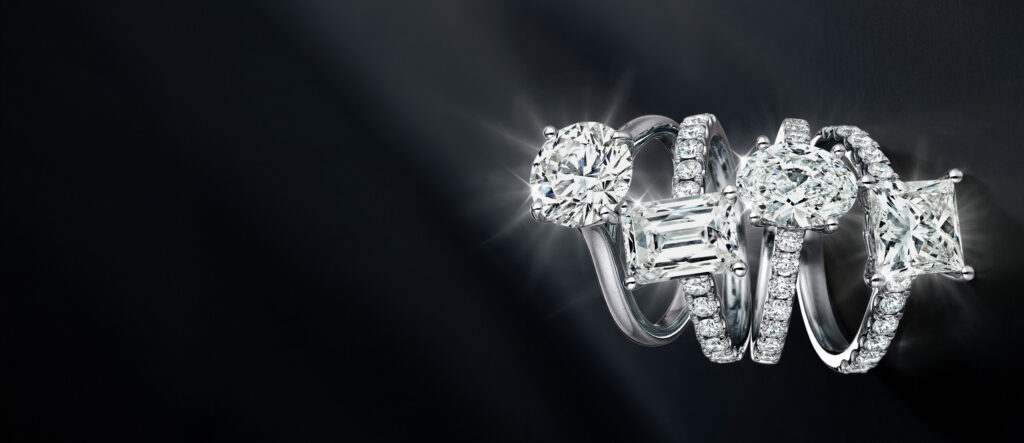
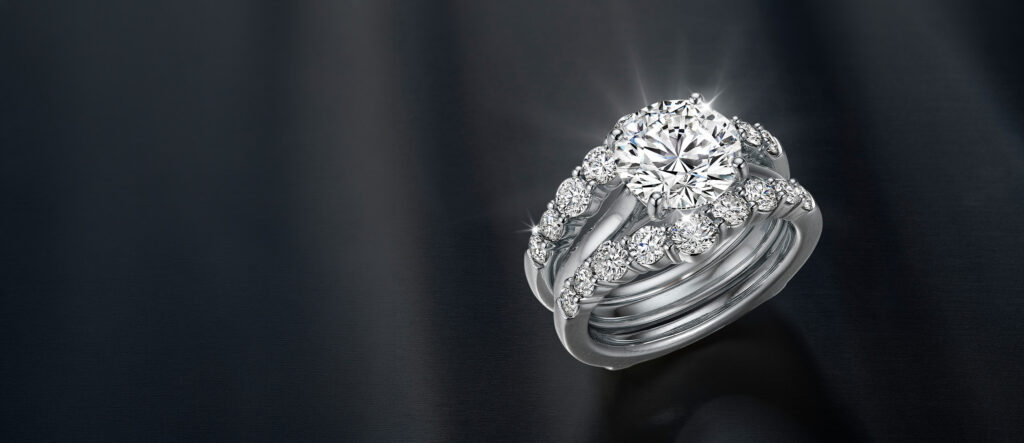
The short answer: The LEO round cut diamond has 66 facets. A standard round brilliant has 57 or 58. Leo Schachter’s master artisans add 8 facets and strategically place them to reflect more light back through the top of the diamond, which creates more sparkle you can see from a distance. The outline is the same. The facet design is what changes.
Key takeaways
- A conventional round brilliant has 57 facets, or 58 when the small culet facet at the bottom is counted.
- The LEO Diamond’s patented cut has 66 facets, placed to maximize light return and far-away sparkle.
- The same proprietary cut is used in The LEO Legacy lab-grown diamond.
- Facet count alone doesn’t decide sparkle. Angles, proportions and placement matter just as much.
What is a round brilliant cut?
The round brilliant is the most popular diamond shape in the world and the benchmark every other cut is measured against. According to the Gemological Institute of America (GIA), a round brilliant has 57 or 58 facets, with the 58th being a tiny flat facet at the bottom called the culet.
The modern round brilliant’s proportions trace back to Marcel Tolkowsky’s 1919 work on diamond design. Its cone-shaped lower half, called the pavilion, is built to bounce light back up through the top of the stone. That’s why round diamonds return more light than most other shapes.
What is the LEO cut?
The LEO cut is Leo Schachter’s patented faceting arrangement for round diamonds. It adds 8 facets to the traditional design, for 66 in total. Each additional facet is placed by hand by LEO’s master diamond artisans on the diamond’s pavilion to increase the return of light and create sparkle that carries across a room.
You’ll find the LEO cut in two collections:
- The LEO® Diamond, a natural diamond and the first diamond independently certified to be visibly brighter.
- The LEO® Legacy Lab-Created Diamond, the first and only lab-created diamond with the same proprietary cut as The LEO Diamond.
LEO cut vs. round brilliant at a glance
| The LEO Cut | Conventional Round Diamond | |
|---|---|---|
| Facets | 66 | 57 or 58 |
| Outline | Round | Round |
| Facet Design | Patented, with 8 additional facets placed by master artisans | Standard industry arrangement |
| Light Performance Grading | The LEO Legacy center stones rated "Excellent" by GSI for brilliance, fire and scintillation | Not standard; depends on the seller and lab |
| Certification | Every center stone certified by GSI, an independent lab | Varies by seller |
| Natural or lab-grown | Both (The LEO Diamond and The LEO Legacy) | Both |
| Where to buy | Kay Jewelers | Most jewelers |
Do more facets mean more sparkle?
Not automatically. A diamond sparkles when its facets are angled and positioned to return light to your eye. Extra facets that are poorly placed can scatter light, and very small facets on a small stone can blur together.
What matters is light return: how much of the light entering a diamond comes back out through the top. LEO’s additional facets are positioned specifically to increase it. For a deeper look at how light moves through a diamond, read Measuring Brilliance.
How the extra facets change what you see
Light return shows up in three ways:
- Brilliance: the bright white light reflected back to you.
- Fire: the flashes of rainbow color created when light splits into its spectrum.
- Scintillation: the play of light and dark sparkle as the diamond moves.
The LEO cut is designed to push all three further than a standard round, with a focus on far-away sparkle: the points of light you notice from across a table, not only when the ring is under a jeweler’s lamp.
How to compare a LEO and a round brilliant in person
- Match the grades. Compare diamonds with similar carat weight, color and clarity so cut is the only real difference.
- Step back. Look at both diamonds at arm’s length, then across a table. Far-away sparkle is where the LEO cut is designed to stand out.
- Change the lighting. Check them under store lighting, near a window and in softer light.
- Use the LEO Diamond Viewer. Selected Kay stores have a viewer that shows a LEO next to any other diamond.
- Ask for the GSI report. Every LEO center stone comes with one. Learn what it covers in What “Brighter Certified” Means.
See the LEO cut in person
Compare THE LEO Diamond side by side with any other diamond at a store near you.
Frequently asked questions
Is a LEO diamond a round brilliant?
The LEO Diamond is available in many different shapes, all of which have a modified facet pattern proven to be visibly more brilliant. They all start from the same outline as a conventional diamond but has extra facets strategically placed to increase light return.
How many facets does a round brilliant diamond have?
A standard round brilliant has 57 facets. Some have a 58th facet, a tiny flat surface at the bottom called the culet. The LEO Diamond has 66.
Is the LEO cut available in a lab-grown diamond?
Yes. The LEO Legacy is the first and only lab-created diamond with the same proprietary cut as The LEO Diamond. Every Legacy center stone is GSI certified and rated “Excellent” for brilliance, fire and scintillation.
Where can I buy a LEO cut diamond?
The LEO Diamond and The LEO Legacy are sold at Kay Jewelers stores and on Kay.com. Use the LEO store locator to find the closest location.